
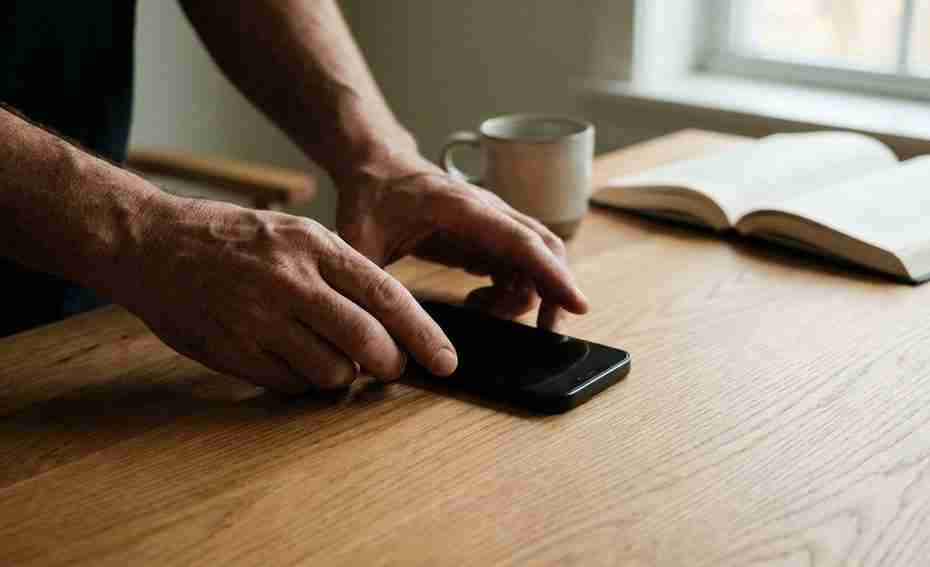
To stop doomscrolling, reduce the cues that pull you into negative feeds, add friction before you open them, and rebuild focus with short daily single-tasking blocks. Digital resilience means you can stay informed without letting your phone set the pace of your mood, sleep, and attention.
If you’ve been lying in bed with tired eyes, a tight chest, and one more headline loading under your thumb, you’re dealing with more than a “bad habit.” Your attention is being pulled by design patterns that reward checking, refreshing, and searching for certainty. This article explains why doomscrolling is so sticky, how it affects focus, and how to build a realistic routine that helps you stop doomscrolling without disappearing from the world.
What Is Doomscrolling And Why Does It Feel Impossible To Stop?
Doomscrolling is the habit of spending too much time reading negative news or distressing online updates, often on a phone or computer. It feels hard to stop because your brain keeps looking for closure, reassurance, or the next update that makes the uncertainty feel settled.
The problem is that the feed rarely gives you a clean stopping point. Infinite scroll, alerts, algorithmic recommendations, and breaking-news labels keep offering one more item. Your brain reads that next item as useful, even when your body is already tense and tired.
This is why shame doesn’t work as a solution. If you tell yourself you’re weak, you miss the part you can actually change: the environment around the habit. Digital resilience starts when you treat doomscrolling as a cue-driven loop, not a character flaw.
How Does Doomscrolling Affect Your Brain, Mood, And Focus?
Doomscrolling can raise anxiety, deepen a negative view of the world, disrupt sleep, and make focused work feel harder. It trains your attention to jump toward threat, novelty, and unfinished information.
Your brain is built to notice danger. That helped humans survive long before smartphones, but news feeds and social platforms can keep that threat system switched on for long stretches. After enough exposure, neutral tasks can feel flat compared with the intensity of bad news.
Your focus also gets fragmented. Every swipe creates a small reset: new headline, new emotion, new choice. After half an hour of this, reading a long document, listening in a meeting, or finishing a task without checking your phone can feel unusually difficult.
There’s also a mood cost. You may start scrolling to feel informed, then leave feeling helpless, angry, or drained. That emotional aftertaste is one of the clearest signs that your news habit has crossed from awareness into overload.
Is Doomscrolling An Addiction Or Just A Bad Habit?
Doomscrolling can feel addictive, but it’s often more useful to treat it as a habit loop reinforced by uncertainty and reward. The loop usually has three parts: a trigger, a scrolling routine, and a short-lived payoff.
The trigger may be boredom, stress, bedtime, a quiet moment at work, or the fear of missing something. The routine is opening the app, checking headlines, refreshing feeds, and scanning comments. The payoff is a brief feeling of control, distraction, stimulation, or social connection.
The trouble is that the payoff fades quickly. Then your brain asks for another hit of information. That’s where digital resilience becomes practical: you don’t need to win a debate with your phone every hour; you need to redesign the loop so the easiest action is no longer the one that drains you.
How Do You Identify Your Personal Doomscrolling Triggers?
Track when, where, and why you scroll for a few days. You’re looking for patterns, not proof that you’re doing something wrong.
Start with three questions: What happened right before you opened the app? What were you feeling? What did you hope the scroll would give you? Common answers include relief, distraction, certainty, stimulation, or a way to avoid starting a demanding task.
Pay special attention to “automatic openings.” These are moments when your phone is in your hand before you’ve made a real choice. Morning bed scrolling, bathroom scrolling, elevator scrolling, and late-night headline checking are common patterns because they attach to stable daily routines.
Once you know the trigger, choose a replacement action that meets the same need with less damage. If the trigger is stress, use a short breathing break. If the trigger is boredom, stand up or stretch. If the trigger is fear of missing out, schedule a planned news check rather than letting every alert become a command.
How Can You Stop Doomscrolling Without Deleting Every App?
You can stop doomscrolling by adding friction between the urge and the feed. Friction makes the habit less automatic, which gives your attention enough space to choose.
Start with your home screen. Move news and social apps into a folder away from the first page, remove widgets that show headlines, and turn off non-urgent notifications. If your phone offers grayscale mode, use it during work hours or after dinner; less visual reward can reduce the pull of repeated checking.
Timers can help, but they fail when they depend only on self-control. Pair them with a physical boundary. Charge your phone outside the bedroom, keep it across the room during focused work, or read news only on a desktop browser. The goal is not punishment. The goal is making the better choice easier to repeat.
Use a “one-door” rule for news. Choose one or two reliable news sources and one planned check-in window. When you stop jumping between apps, search pages, group chats, and comment threads, your brain gets fewer open loops to chase.
How Can You Rebuild Your Attention Span After Too Much Scrolling?
You can rebuild your attention span through repeated practice with single-tasking, mindful pauses, and low-stimulation recovery. Attention improves when you train it in small, repeatable blocks rather than waiting for motivation to return.
Begin with a 15-minute focus block. Pick one task, remove your phone from reach, and keep a sheet of paper nearby. When the urge to check appears, write down “check phone” and return to the task. This gives the urge a place to go without letting it run the session.
Mindfulness also helps because it trains you to notice an impulse before acting on it. You don’t need a long routine. A simple pause works: feel your feet, relax your jaw, take a few slow breaths, and name the urge. “I’m looking for reassurance” is more useful than “I have no discipline.”
Attention restoration also needs breaks that don’t become more scrolling. Short walks, chores without headphones, reading a printed page, cooking, stretching, or sitting outside all give your brain a cleaner reset. The aim is to rebuild your tolerance for slower inputs.
How Do You Stay Informed Without Falling Back Into Doomscrolling?
Stay informed by setting a clear news routine: fewer sources, planned check-ins, and a cutoff time. The difference between staying informed and doomscrolling is whether you leave with usable knowledge or a nervous system stuck on alert.
Choose sources that summarize events without pushing endless updates. Read one article fully instead of scanning ten headlines. If a story is still changing hour by hour, decide when you’ll check again instead of refreshing until something new appears.
Protect evenings with a news cutoff. Late-night scrolling tends to mix fatigue, emotional reactivity, and lower self-control. If you need a final check, set it early enough that your mind has time to settle before sleep.
Social media needs the same boundaries. Unfollow accounts that reliably leave you angry, helpless, or wired. Mute terms when needed, turn off push alerts, and treat comment sections as optional rather than part of being informed.
What Should You Do When You Slip Back Into Doomscrolling?
When you slip, reset the system instead of attacking yourself. Guilt often becomes another trigger, which sends you back to the same feed for escape.
Use a short recovery sequence. Put the phone down, stand up, drink water, and change rooms if possible. Then ask one practical question: “What cue pulled me in?” That question moves you from blame to adjustment.
If the same slip keeps happening, add friction at that exact point. Morning scrolling may need a phone-free bedroom. Workday checking may need website blockers. Late-night news may need a charger outside the bed area and a printed book nearby.
Digital resilience is built through repairs. A good plan expects lapses and makes them shorter, less intense, and easier to recover from. You’re not aiming for perfect phone use. You’re aiming for attention you can trust again.
How To Stop Doomscrolling Fast
- Set 10-minute news windows.
- Turn off alerts.
- Hide social apps.
- Pause, breathe, walk.
- Single-task 15 minutes daily.
Build Digital Resilience One Choice At A Time
Digital resilience grows when your phone stops being the default answer to stress, boredom, uncertainty, and fatigue. You can stop doomscrolling without cutting yourself off from news, friends, or work by changing cues, adding friction, and training focus in short daily blocks. The strongest plans are boring in the best way: fewer alerts, fewer sources, planned check-ins, and real breaks that don’t turn into another feed. Start with one trigger today, fix the environment around it, and let your attention recover through repetition.
References
- Merriam-Webster — Doomscrolling Definition
- Harvard Health Publishing — Doomscrolling Guidance
- Cleveland Clinic — What Is Doomscrolling?
- American Psychological Association — Stress Resources
- Pew Research Center — Social Media Fact Sheet
- DataReportal — Digital Global Overview Report
- Center for Humane Technology — Digital Attention And Wellbeing
- BBC Worklife — The Attention Span Myth
- Penguin Random House — Dopamine Nation By Anna Lembke, MD.