
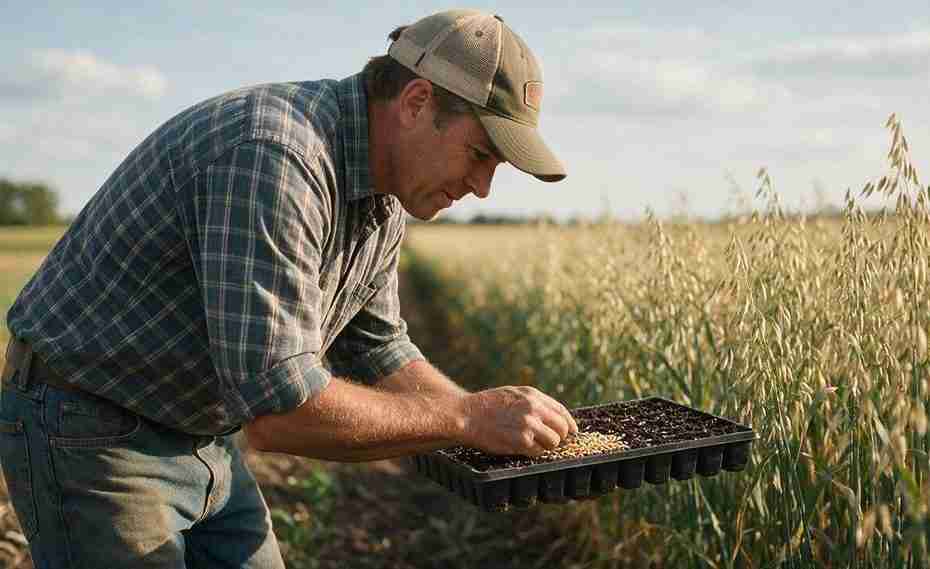
You should plant oats when the soil at seeding depth is near 40°F (4°C), workable, and free from waterlogged conditions. When deciding when to plant oats, treat the calendar as a regional guide and let soil temperature, moisture, frost risk, and crop purpose make the decision.
Planting on a familiar date can fail when spring arrives late or repeated rain leaves the seedbed cold and saturated. This guide explains how to time spring and fall oats, evaluate field readiness, and adjust your decision for grain, forage, or cover crop production. You’ll also learn how to avoid the timing errors that lead to seed rot, weak emergence, and heat stress later in the season.
Why Does Soil Temperature Matter More Than The Date?
Soil temperature tells you whether oat seed can begin germinating at a useful rate. Spring oats can germinate when the soil at seeding depth reaches about 38 to 40°F (3 to 4°C), with early growth performing best as temperatures rise into the 45 to 65°F (7 to 18°C) range.
A calendar date only estimates what conditions usually look like in your area. It can’t account for lingering snow cover, a cold rain pattern, elevation, field slope, residue cover, or differences between sandy and clay-rich soils. Two fields a few miles apart can reach planting condition on different days. A south-facing field with good drainage often warms and dries sooner than a low area that holds water.
Temperature also needs to be considered alongside moisture. Seed placed in cool but aerated soil may emerge slowly, yet seed sitting in cold, saturated ground faces a greater risk of rot and seedling disease. Check the temperature where the seed will sit rather than relying on air temperature or the warmth of the soil surface. A warm afternoon doesn’t mean the seed zone is ready.
When Should You Plant Spring Oats?
Plant spring oats as early as the soil can be worked without creating compaction or a smeared seedbed. In many areas, that point arrives about two to four weeks before the average last frost date.
Early planting gives oats more time to establish during cool weather. That supports tillering, root development, and head formation before summer heat speeds crop development. Oats are cool-season cereals, so delaying until conditions feel warm enough for summer crops can shorten their productive growth period. Grain crops face particular pressure when hot weather arrives during grain fill.
Young oat plants usually tolerate light frost, so you don’t need to wait until all frost risk has passed. A hard freeze can still injure seedlings, especially if plants have emerged and begun active growth. Compare current soil conditions with the short-term weather forecast before drilling seed. If suitable soil is followed by ordinary cool spring weather, early planting usually makes more sense than waiting for a frost-free calendar date.
Can You Plant Oats In The Fall?
You can plant fall oats where the selected variety and regional winter conditions allow adequate survival. A general fall oats planting time is six to eight weeks before the first killing frost.
That window gives seedlings time to emerge and build enough growth before winter. Planting too late can leave you with small plants and limited root development. Planting far too early may produce excessive growth before cold weather arrives. The right date changes with latitude, elevation, variety, intended use, and the usual arrival of hard freezes.
Winter survival is more realistic in southern and transition-zone regions than in colder northern production areas. Northern growers commonly use spring oats because many oat varieties winterkill under severe cold. Fall oats planted as a cover crop may still provide value even when they don’t survive until spring. Their purpose may be fall growth, soil cover, nutrient capture, or forage rather than a harvested grain crop the following season.
How Do You Know If The Soil Is Ready?
Ready soil meets three tests: the seed zone is warm enough, excess water has drained, and fieldwork won’t damage the soil structure. Passing only the temperature test isn’t enough when the ground remains saturated.
Use a soil thermometer at the planned seeding depth, checking several representative locations across the field or planting area. Avoid judging readiness from one sunny edge, bare patch, or raised spot. Oats are commonly planted about 1 to 1.5 inches deep, so measure near that depth. When moisture is dependable and the soil is cool, shallower placement within the recommended range can support quicker emergence.
Check how the soil behaves when handled and worked. Soil that smears, sticks firmly to equipment, forms dense clods, or leaves compressed sidewalls is generally too wet. Planting under those conditions can reduce air movement around the seed and restrict early root growth. Waiting briefly for drainage is often safer than forcing equipment through a wet field simply because the target date has arrived.
Does Your Crop Goal Change When To Plant Oats?
Yes, your intended harvest changes how much flexibility you have. Grain oats usually benefit most from the earliest suitable spring planting, whereas forage and cover crop oats can fit a wider set of planting periods.
For grain production, you want the crop to complete early vegetative growth under cool conditions. Late planting exposes more of the reproductive and grain-filling period to heat, which can reduce yield potential and grain quality. An early, even stand also competes better with weeds. The planting decision should favor timely establishment rather than waiting for warmer conditions that oats don’t require.
Forage oats can be planted according to the planned grazing, hay, or green-chop period, provided there is enough growing time before damaging weather. Cover crop timing depends on how much fall or spring growth you need before termination or winterkill. A cover crop planted near the first killing frost may emerge but produce little useful biomass. Define the job of the crop before choosing the window, then work backward from the expected grazing date, harvest period, or freeze.
How Late Can You Plant Oats?
You can plant oats after the preferred window, but the chance of achieving a strong grain crop falls as warm weather moves closer. There is no universal last planting date because summer temperatures, rainfall, latitude, and crop purpose differ by region.
Late-planted oats develop under warmer conditions and often move through growth stages faster. That gives plants less time to produce tillers and build the structures that support grain production. Heat during grain fill can further reduce seed size and test weight. A late crop may still produce forage or ground cover when its grain prospects are limited.
Don’t treat a missed local planting window as an automatic crop failure. Review the field condition, intended use, expected summer weather, and remaining growing season before proceeding. Your state extension service can provide planting ranges designed for local conditions. If the goal is grain and the preferred period has passed, compare the likely return with another crop rather than planting oats by habit.
What Planting Mistakes Lead To Poor Oat Establishment?
The most common mistakes are planting by date alone, working saturated soil, seeding too deep, and delaying until the weather resembles summer. These errors can produce uneven emergence even when seed quality is good.
Cold soil by itself doesn’t always rule out planting, since oats are adapted to cool seedbeds. Cold soil combined with excess water creates a more serious problem. Seed may remain inactive for longer, oxygen around the seed can become limited, and disease pressure can increase. Poor drainage can continue affecting roots after emergence, especially in low areas.
Depth errors can also weaken the stand. Seed placed too near the surface may lose contact with dependable moisture, yet unnecessarily deep seed must use more stored energy before emerging. Set the drill for the actual field surface, then stop and inspect seed placement after planting begins. Recheck depth when soil type, residue, slope, or moisture changes across the field.
Another mistake is postponing spring oat planting until every risk has disappeared. Waiting for warm soil and no possibility of frost can push sensitive growth stages into hotter weather. Young plants can tolerate ordinary cool conditions better than many new growers expect. The better decision balances frost exposure against the known disadvantages of late planting.
How Should Regional Planting Windows Be Used?
Use a regional planting window as a starting signal to inspect the field, not as an appointment that must be kept. Your local soil and current season determine whether that general window is accurate for a particular year.
Northern growers usually focus on spring oats and plant once the ground becomes workable. Southern and transition-zone growers may have fall planting options when winter survival is realistic. Elevation, drainage, residue, slope, and local weather can move the usable window earlier or later. Broad growing zones can’t capture all of those field-level differences.
State extension recommendations offer a better reference than a national planting calendar. Pair that local guidance with measurements from your own seed zone and an assessment of field workability. If nearby crop progress information is available, use it to compare regional activity without assuming neighboring fields share your soil conditions. The best answer to when to plant oats comes from local guidance confirmed by what you find in the field.
When Should You Plant Oats?
- Plant spring oats when soil at seed depth reaches 40°F (4°C).
- Plant fall oats 6-8 weeks before the first killing frost.
- Wait if soil is waterlogged or colder than 38°F (3°C).
Let The Seedbed Make The Call
Your best planting date is the first workable opportunity when the seed zone is near 40°F, adequately drained, and likely to remain suitable through early emergence. Spring grain oats benefit from early planting because cool conditions support vegetative growth and reduce later exposure to heat. Fall oats need enough time to establish before a killing frost, and their winter survival depends on variety and region. Use local date ranges to know when to begin checking, then measure temperature, inspect moisture, and confirm planting depth. The calendar can point you toward the field, but the seedbed should make the call.
References
- University of Minnesota Extension: Organic Oat Production
- University of Minnesota Extension: Late Planting Spring Small Grains
- Penn State Extension: Spring Oats Seeding Date
- North Dakota State University: Oat Production in North Dakota
- United States Department of Agriculture National Agricultural Statistics Service: Crop Progress and Condition.