
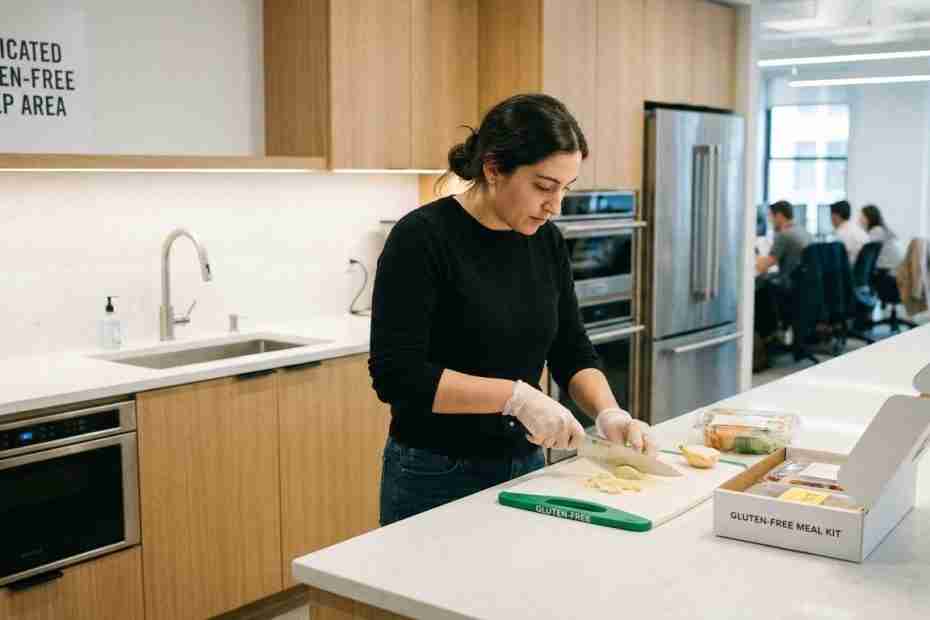
Yes, you can stay gluten-free at work without turning every lunch break into a stress test. You need clear systems for shared kitchens, safer snack choices, smarter event planning, and direct communication that keeps your health protected without creating extra friction.
Workplaces are built around convenience, and convenience often means shared counters, buffet trays, surprise treats, and catered meals with weak labeling. That setup creates real risk if you have celiac disease or another medically necessary gluten-free need. This guide gives you practical ways to manage office kitchens, desk snacks, meetings, potlucks, and workplace accommodations so you can make faster decisions, reduce exposure, and keep your day moving.
How Do You Stay Gluten-Free In A Shared Office Kitchen?
You stay safer in a shared office kitchen when you treat it as a controlled-risk space, not a trusted one. Most workplace kitchens are built for volume and speed, not for food handling standards that protect someone who must avoid gluten and cross-contact. That means your default operating mode should be separation, labeling, and verification. If you walk in assuming a break room is safe because it looks clean, you hand too much control to surfaces, utensils, and coworkers who may not understand how little contamination it takes to create a problem.
The highest-risk items are usually the most ordinary ones. Shared toasters, cutting boards, dish sponges, butter tubs, condiment bottles, and communal utensils pick up crumbs and residue fast. Countertops often look harmless and still carry enough leftover particles from bread, pastries, crackers, and sandwich prep to make a packaged gluten-free meal risky the moment it touches the surface. A microwave may be usable, but only if your food stays covered and the area you touch is clean. The refrigerator can work for storage, but only when your food is sealed, labeled, and protected from spills or open containers.
The strongest workplace habit is building a personal system that removes guesswork. Keep your meals in sealed containers. Store them in a separate lunch bag or on a designated shelf if your office allows it. Bring your own utensils, napkins, and one or two backup items that do not require any kitchen prep. If you use shared appliances, wipe the handle, the buttons, and the area where your container sits. That may feel repetitive, yet repetition is what turns a fragile routine into one that actually protects you on rushed weekdays.
A desk-level backup setup matters more than many people expect. Keep disinfecting or food-safe wipes, disposable cutlery, a paper towel barrier, and at least one shelf-stable gluten-free meal or snack in your drawer. That gives you a fallback when the refrigerator is packed, the kitchen is dirty, or the team unexpectedly brings in breakfast. You do not need a dramatic setup. You need a dependable one that lets you make a safe choice in under a minute.
If your office has any flexibility, ask for a few practical improvements that carry real value. A labeled gluten-free shelf, a dedicated toaster, individual condiment packets, and better food labeling reduce avoidable mistakes. These are minor operational changes, yet they remove several of the most common routes for cross-contact. Offices often respond better when the request sounds specific and easy to implement, not broad or abstract.
You also need a firm standard for what you will not use. A shared toaster should stay off your list. Open spreads, crumb-covered counters, and unlabeled leftovers should stay off your list too. This is where many employees get into trouble, not from obvious gluten ingredients, but from casual shortcuts taken during busy days. A strong gluten-free routine at work does not depend on luck. It depends on repeatable boundaries.
What Gluten-Free Snacks Are Safest To Keep At Work?
The safest work snacks are sealed, labeled, portable, and easy to eat without touching shared surfaces. Packaged foods with a clear gluten-free label give you a stronger starting point than bakery boxes, communal bowls, or homemade treats passed around during meetings. You want snacks that survive a desk drawer, a commute, or a long afternoon without requiring prep. That keeps you fed when office food turns out to be unsafe, poorly labeled, or gone before you get there.
Good desk staples include gluten-free protein bars, packaged popcorn, nuts if they fit your diet, nut butter packets, shelf-stable yogurt alternatives if refrigeration is available, fruit cups, applesauce pouches, jerky, gluten-free crackers, rice cakes, tortilla chips in single-serve bags, dried fruit, roasted chickpeas, and individually wrapped sweets with clear labeling. Whole fruit also works well because it stays naturally separated from office handling risks. The less a snack depends on communal serving tools, the better it performs in a real workplace.
You also want snacks that solve more than one problem. A bar may cover a missed breakfast, a delayed lunch, or an event where the only safe option is plain coffee. A single-serve soup cup or oatmeal cup can bridge a long afternoon if the ingredient label and your own tolerance make it a fit. Foods that offer substance matter because many gluten-free employees are not just looking for a nibble. They are trying to stay functional through meetings, commute time, and irregular meal schedules without resorting to unsafe convenience food.
The foods that create the most trouble are usually social snacks, not personal ones. Open candy dishes, shared chip bowls, pastry trays, office birthday cakes, donut boxes, and unlabeled leftovers encourage fast decisions under social pressure. Once multiple hands have moved around a snack table, serving spoons shift, labels disappear, and crumbs travel. At that point, the food may still look appealing, but it no longer gives you enough control. A snack is only useful when it removes uncertainty, not when it adds another layer of it.
One of the smartest habits is rotating a small stash so you never get stuck with expired food you no longer want to eat. Keep a week or two of backup snacks at your desk, then replace what you use during your normal grocery cycle. This keeps your options familiar and your storage tidy. It also cuts down on the moment when a coworker offers something unsafe and you feel cornered because you have nothing else on hand.
If your office orders regular snacks for staff, ask for packaged gluten-free options to become part of the standard supply, not a special exception that appears once and vanishes. Offices often stock fruit, chips, popcorn, nuts, and bars anyway. Adding better labeled options benefits more than one employee and improves reliability for visitors, clients, and new hires who also avoid gluten. When the pantry is built with inclusion in mind, you spend less time negotiating your basic needs.
Can A Workplace Accommodate Celiac Disease Or Other Medically Necessary Gluten-Free Needs?
Yes, a workplace may need to provide reasonable accommodation when a medical condition requires changes to the work environment or the way certain benefits are offered. The exact answer depends on your role, your workplace, and the functional issue that gluten exposure creates for you. In practice, many employees do not need a dramatic accommodation package. They need targeted adjustments that make work meals, shared spaces, travel, and mandatory events safer and more manageable.
The most useful starting point is precision. If you tell an employer you need “gluten-free support,” that can sound broad and vague. If you explain that you need permission to bring outside food to catered meetings, advance notice about team meals, a clean storage area for your lunch, flexibility around work travel dining, or a way to participate in food-centered events without exposure, the conversation becomes more actionable. Employers respond better to needs they can identify, evaluate, and implement.
You do not need to turn a workplace conversation into a legal speech. Clear, plain language works. State that you have celiac disease or another medically necessary gluten-related condition and that exposure creates health consequences that affect your ability to work comfortably and safely. Then identify the adjustment you need. That could include access to a refrigerator shelf, notice before catered lunches, a separately packaged meal at company events, flexibility to step away for safe food, or approval to expense a safe meal during business travel if team food is not suitable.
Some employees also need accommodations tied to scheduling and attendance. If accidental exposure creates symptoms that affect concentration, stamina, or immediate work capacity, flexibility around breaks, remote work in limited situations, or leave procedures may become part of the discussion. The right accommodation is the one that addresses the real barrier, not the one that sounds most formal. That is why a practical record of situations that have created problems can help. It gives your employer a concrete picture of what needs fixing.
Food accommodation at work gets misunderstood because many offices think the issue begins and ends with menu choice. It does not. A meal labeled gluten-free is not enough when it arrives mixed into a buffet, gets handled with shared utensils, or comes without anyone knowing which plate belongs to you. If your workplace provides meals as part of a training day, staff meeting, celebration, conference, or travel schedule, safe access matters. You should not have to choose between attending a work function and protecting your health.
Many employees hesitate to ask because they want to avoid attention. That instinct is understandable, yet silence usually creates more disruption later. One direct conversation with human resources, a manager, or an office administrator can prevent months of awkward workarounds. A good accommodation plan lowers friction for everyone. You get predictability, and the workplace gets a clear process instead of repeated last-minute confusion.
How Should Teams Handle Gluten-Free Employees At Meetings, Catered Lunches, And Office Parties?
Teams handle gluten-free employees well when they plan food early, confirm details with the vendor, and separate the gluten-free meal from the general service line. The biggest failure point is not bad intent. It is lazy logistics. Offices wait until the food arrives, discover nothing is clearly labeled, and then expect the employee to sort it out in front of everyone. That is exactly the kind of avoidable mess that makes routine work events feel exclusionary.
The cleanest process starts before the order is placed. Ask about dietary needs when the meeting or event is scheduled, not the morning of the lunch. Confirm whether someone needs a gluten-free meal, then communicate that requirement to the caterer in specific terms. You want a meal prepared separately, labeled clearly, and ideally packaged on its own. If the meal is part of a buffet, arrange for the gluten-free plate to be set aside before guests move through the line. Once serving utensils start shifting from tray to tray, confidence drops fast.
Menu selection also matters. Offices create fewer problems when they order food that can be served cleanly and customized with low handling risk. Rice bowls, baked potato bars, grain-free salad builds with separated toppings, taco bars built around corn tortillas and labeled fillings, or individually boxed meals generally work better than mixed sandwich platters, pastries, and pizza. Some foods are not impossible to serve safely, but they demand more care than most office managers actually apply on a busy day.
There is also a strong etiquette component. No employee should have to interrogate a delivery driver, search labels across a crowded table, or explain celiac disease to a room full of coworkers just to eat lunch. A designated organizer should know where the gluten-free meal is, who it belongs to, and whether it stayed protected during setup. That one layer of ownership changes the tone of the event. It turns food planning from public problem-solving into normal professional execution.
Office parties deserve the same discipline. Celebrations often create the worst outcomes because food is treated as casual, optional, and fun, which means less attention to process. Cakes, shared desserts, appetizer platters, and snack tables are easy places for crumbs and serving tools to mix. If your team wants inclusive events, it should normalize individually wrapped options, clear labels, and at least one meaningful item that a gluten-free employee can eat without hesitation. A token fruit plate does not solve the problem when everyone else gets a full meal.
If you manage teams, make one habit standard: no assumptions. Ask, confirm, label, separate, and communicate. That keeps the event smooth and preserves trust. People remember food failures at work because they carry a message about whether anyone thought ahead. When the logistics are handled well, the event stays about the meeting, the celebration, or the team milestone, not about who was left to fend for themselves.
Are Potlucks Ever Safe If You Have Celiac Disease?
Potlucks are usually the least reliable food format for anyone who must avoid gluten strictly. The issue is not just ingredients. It is preparation, handling, labeling, transport, serving, and the fact that most home kitchens are not managed with cross-contact controls in mind. A coworker may sincerely believe a dish is gluten-free because it contains no bread or pasta, yet the spoon, pan, counter, seasoning blend, or prep flow may tell a different story.
You should evaluate potlucks based on trust, traceability, and control. Can you verify every ingredient? Can you confirm how the food was prepared? Can you see a label that means something? Can you prevent shared utensils from crossing into your dish? In most office potlucks, the answer to several of those questions is no. Once the food is on the table and people start serving themselves, the risk rises quickly. A dish that started out safe may stop being safe within minutes.
That does not mean every potluck is unusable. It means the default standard should be caution. If you attend, the lowest-risk choice is often eating your own meal and joining the event for the social part. That lets you participate without turning lunch into a gamble. Many people with celiac disease already use this strategy because it protects health and removes the pressure of making a public decision at the table.
If your office insists on potlucks, build rules that improve the event instead of pretending the problem does not exist. Require ingredient cards. Ask people to identify allergens and major ingredients clearly. Use dedicated serving utensils for every dish and keep them with the item. Place gluten-free foods on a separate area of the table and allow the employee who needs them to serve first. Better yet, shift part of the event toward sealed store-bought items or individually packaged dishes that reduce handling risk.
Still, it is important to keep expectations grounded. A potluck with labels is better than a potluck without labels, but labels alone do not guarantee safety. Home kitchens vary, recipes change, and people forget details. If your body cannot tolerate mistakes, your safest potluck plan may be a polite decline of the shared food, not a selective sampling strategy. That is not being difficult. It is applying the same caution you would use in any uncontrolled food environment.
There is also a social layer many articles miss. Potlucks can make gluten-free employees feel like they must choose between health and team belonging. You can reduce that tension by deciding your plan before the event starts. Bring a meal you trust, keep your explanation short if anyone asks, and focus on the interaction rather than the table. When your routine is already decided, you avoid the awkward pause where people pressure you to “just have a little.”
What Should You Ask A Caterer Or Office Manager Before A Team Event?
You should ask about preparation, packaging, labeling, service flow, and who owns the handoff. A caterer saying “we have a gluten-free option” is only the starting point. You need to know whether that option is prepared with cross-contact controls, whether it will arrive sealed or separated, whether it will be labeled clearly, and whether someone onsite will protect it from buffet mixing. A good question gets you operational detail, not reassurance.
Start with the meal itself. Ask whether the gluten-free item is a dedicated dish or a modified version of the standard menu. Ask whether sauces, dressings, seasonings, and sides are included in the gluten-free plan. Ask whether the kitchen prepares the meal separately and how they prevent cross-contact during assembly. If the answer is vague, that tells you something useful. Confidence should come from process, not from a casual promise that the kitchen “does this all the time.”
Move from preparation to delivery. Ask whether the meal can be packaged separately, sealed, and labeled with the recipient’s name. Ask whether it will be kept apart from the buffet and whether the employee can receive it before the main line opens. This matters because many event failures happen after the food leaves the kitchen. A safe plate can become unsafe quickly when it is placed beside shared trays and serving utensils.
You also need to know who will handle the problem if something goes wrong. Is it the office manager, event planner, administrative assistant, team lead, or vendor contact? Someone should be able to answer a simple question when the food arrives. “We are not sure which one is gluten-free” is not a small mistake. It means the handoff process failed. Naming an owner ahead of time reduces confusion and protects the employee from having to troubleshoot in public.
A practical script works well in email. State that you need a gluten-free meal due to celiac disease or another medically necessary condition, and ask whether the meal will be prepared separately, packaged separately, labeled clearly, and kept apart from shared service. Ask whether ingredients and handling can be confirmed if needed. This message is short, specific, and easy for an organizer to forward to a vendor. It also creates a written trail that helps if details get lost.
If the answers are weak, your backup plan should be immediate, not emotional. Bring your own meal, ask for reimbursement if company policy supports it, or coordinate a separate order from a trusted provider. The goal is not to win a debate about food planning. The goal is to show up, do your job, and stay safe. Strong planning gets you there faster than goodwill alone.
What Is The Best Low-Drama Way To Explain Gluten-Free Needs To Coworkers?
The best explanation is short, medical, and practical. Say that you have celiac disease or a medically necessary gluten-free condition and need to avoid gluten and cross-contact, not just obvious bread products. That gives coworkers a clear reason without inviting a long discussion about diet trends, wellness culture, or personal preferences. People usually respond better when they understand that this is a health requirement tied to everyday work situations.
You do not need a detailed script for every person in the office. Focus on the people who affect your food environment most: your manager, office administrator, event organizer, travel coordinator, and close teammates who regularly include you in lunches or celebrations. A single clean explanation to the right people prevents repeated friction. It also lowers the chance that a coworker will keep ordering unsafe food under the mistaken belief that removing the bun fixes everything.
Specific language helps more than long explanations. You can say that shared toasters, buffet lines, homemade foods, and mixed serving utensils are common problems. You can say that labeled, separately packaged food works best. You can say that advance notice helps you plan. These points are easy to understand and easy for others to act on. General statements about being “sensitive” often get interpreted too loosely, which leads to avoidable mistakes.
Polite firmness matters in moments when food is being offered directly. If someone hands you a treat that you cannot verify, decline without apology or over-explaining. A simple “Thanks, but I need to stick with food I know is safe” is enough. Long justifications often invite debate, and debate is rarely useful when the food is already in front of you. The goal is to move on cleanly and keep the interaction professional.
It also helps to reduce dependence on coworker memory. Keep your own food available, remind event planners early, and follow up before major meetings or celebrations. Good communication is not a one-time announcement. It is a maintenance habit. When your coworkers see that your requests are consistent and practical, they are more likely to respect them and build them into routine planning.
If you lead teams, this is where office culture shows up in real terms. Respecting gluten-free needs is not about making a grand gesture. It is about removing the small recurring failures that make someone feel overlooked. You can build a more usable workplace with straightforward communication, cleaner food procedures, and a little discipline around planning. That is what people remember.
How Can You Stay Gluten-Free At Work Every Day?
- Bring sealed meals and labeled snacks.
- Avoid shared toasters, open spreads, and buffet utensils.
- Ask for separately packaged event meals.
- Store backup food at your desk.
- Tell key coworkers your needs in plain, direct language.
Build A Workplace Routine That Protects Your Health
Staying gluten-free at work gets easier when you stop relying on chance and start using repeatable systems. A sealed lunch, a stocked desk drawer, a clean script for coworkers, and a few event-planning questions remove most of the daily friction. Shared kitchens, office snacks, catered meals, and potlucks do not have to control your day when you already know your standards. The strongest routine is simple enough to repeat under pressure and firm enough to protect you when workplace food culture gets messy.
References
- Gluten Intolerance Group – The Gluten-Free Office and Workplace
- Food and Drug Administration – Questions and Answers on the Gluten-Free Food Labeling Final Rule
- Food and Drug Administration – Gluten and Food Labeling
- U.S. Equal Employment Opportunity Commission – Disability Discrimination and Reasonable Accommodation
- U.S. Equal Employment Opportunity Commission – Work at Home or Telework as a Reasonable Accommodation
- National Institute of Diabetes and Digestive and Kidney Diseases – Definition and Facts for Celiac Disease
- PubMed – The Prevalence of Celiac Disease in the United States
- Professional Convention Management Association – 6 Questions to Ask About Gluten-Free Meal Options
- Beyond Celiac – Gluten-Free Party Etiquette
- Reddit – How Do You Handle an Office Kitchen?
- Reddit – Work Snacks?
- Reddit – What Would You Do: Office Edition
- Reddit – Work Catering
- Reddit – Office Job While Gluten-Free
- Reddit – Work Potluck
- Reddit – Please Let Me Know If the Menu Does Not Have Gluten-Free Options
- Reddit – Do You Tell Coworkers You Are Gluten-Free?