
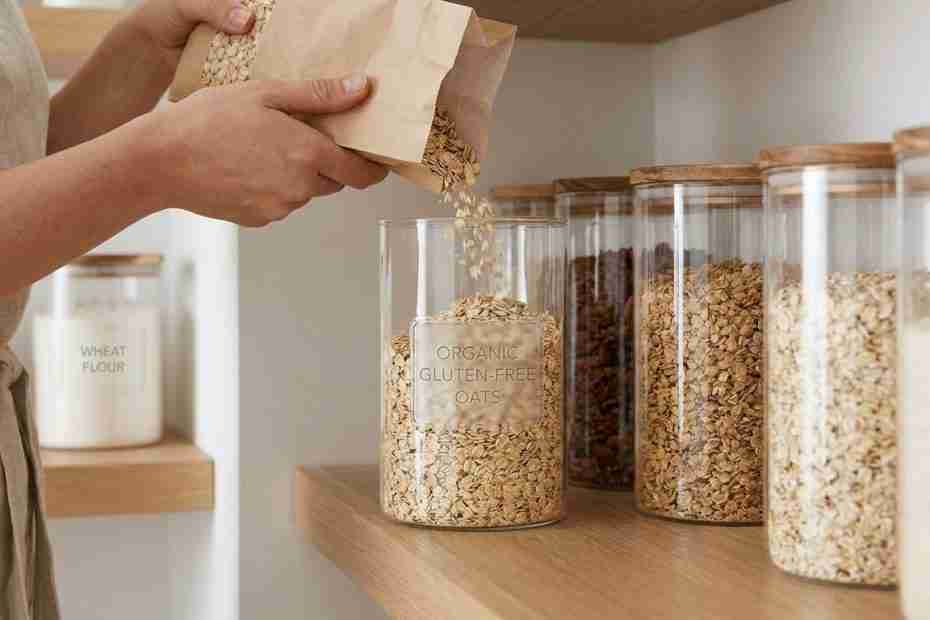
Gluten-free oats stay safe at home when you store them in a sealed, clearly labeled container, keep them away from wheat-based foods, and stop shared scoops from touching them. Your pantry system matters just as much as the label on the package.
If you want your oats to remain truly usable for a gluten-free household, you need storage habits that prevent crumbs, flour dust, and casual mix-ups. This guide shows you where to place gluten-free oats, which containers work best, how to handle shared kitchens, and which everyday mistakes quietly raise cross-contact risk.
What Is The Safest Way To Store Gluten-Free Oats At Home?
The safest setup is simple and strict: keep your gluten-free oats in a sealed container that is used only for that product, mark it clearly, and place it in a part of the pantry that gluten-containing foods do not touch. If the original bag is resealable and sturdy, you can place that bag inside a second airtight container for added protection. That extra barrier reduces the chance of crumb transfer, flour dust exposure, and accidental handling by someone who is not following your system.
You should treat pantry storage as part of your gluten-free routine, not as an afterthought. Oats can enter your home properly labeled and still become unsafe through shared handling. A family member using the same measuring cup for regular cereal, a roommate reaching into the container after handling bread, or an open bag sitting under baking supplies can undo the protection built into the original package.
If your kitchen is shared, build visible rules into the setup. Use bold labels like Gluten-Free Oats Only, assign a dedicated scoop, and keep the container closed between uses. Safe storage works best when the system is obvious enough that nobody has to guess what belongs where.
Are Oats Naturally Gluten-Free, Or Do You Need Labeled Gluten-Free Oats?
Oats are naturally free from gluten, yet that does not make ordinary oats safe for a strict gluten-free diet. The issue is cross-contact during farming, transport, milling, and packing. Oats often come into contact with wheat, barley, or rye long before they reach your pantry, which is why you need oats that are specifically labeled gluten-free.
In the United States, foods labeled gluten-free must meet the Food and Drug Administration standard of less than twenty parts per million of gluten. That label gives you a regulated baseline, which is far safer than assuming plain oats are acceptable. If you are storing oats for someone with celiac disease or a medically necessary gluten-free diet, buying unlabeled oats is not a shortcut worth taking.
You should also remember that purchasing labeled gluten-free oats solves only the sourcing problem. It does not protect the oats once they enter a busy pantry. Safe sourcing and safe storage have to work together, or your end result is still compromised.
Where Should You Keep Gluten-Free Oats In The Pantry?
Your best option is a dedicated shelf, bin, or pantry zone reserved for gluten-free staples. Put gluten-free oats on a higher shelf whenever possible. That placement matters because crumbs and flour particles fall downward, and a lower shelf can collect contamination from foods stored above it.
If anyone in your home bakes with wheat flour, you need tighter controls. Flour spreads farther than most people expect, settles on surrounding surfaces, and can reach containers that were left open briefly. In homes where baking is common, a smart setup is to place the oat container inside a secondary lidded bin so you create one more barrier between the oats and airborne residue.
You also want distance from crumb-heavy foods like sandwich bread, crackers, baking mixes, pancake mix, and open cereal boxes. A pantry can look tidy and still be risky if gluten products are constantly handled in the same space. Safe placement is less about neatness and more about separation.
Do You Need A Dedicated Container And Scoop For Gluten-Free Oats?
Yes, and this is one of the most important parts of the entire system. A dedicated container protects your oats from mix-ups, and a dedicated scoop prevents the most common household storage mistake. Shared scoops move fast between flour, cereal, baking ingredients, and oats, which makes them a practical source of cross-contact.
You should not rely on memory here. People move quickly in kitchens, especially in the morning. If your measuring cup looks like every other measuring cup in the drawer, someone will eventually use it for the wrong food. Keep the scoop inside the gluten-free oat container or clipped directly to it, and label the lid so the rule is visible at the point of use.
A rigid container also gives you control that a soft bag does not. Bags slump, spill, tear, and pick up residue from shelves. A sturdy jar or food-safe storage container is easier to clean, easier to close fully, and easier for everyone in the household to recognize as a protected item.
What Containers Work Best For Gluten-Free Oats?
The best container is airtight, easy to clean, and easy to label. Glass jars work well because they resist odor retention, clean up thoroughly, and make it easy to see what is inside. Food-grade plastic containers also work, especially when they seal tightly and are reserved for gluten-free use.
If you use plastic, pay attention to wear. Deep scratches, cloudy surfaces, and damaged lids make containers harder to clean and harder to trust in a strict gluten-free kitchen. You do not need expensive storage products, yet you do need containers that close securely and hold up under repeated washing and handling.
The original oat bag is the weakest long-term option once opened. It offers less defense against pantry crumbs, moisture, pests, and accidental scooping. If you keep the oats in the original package, place that package inside a resealable outer bag or airtight bin and still apply a clear label. The goal is not just freshness. The goal is controlled handling.
What Are The Most Common Cross-Contact Mistakes In Shared Kitchens?
The biggest mistakes are usually ordinary habits that nobody notices until symptoms show up. Shared scoops, open containers, and storing gluten-free oats beside wheat flour are at the top of the list. Another common problem is setting the oat bag down on a counter that was just used for bread, baking mix, or crackers.
You should also watch for “clean enough” assumptions. A scoop rinsed quickly in the sink is not the same as a protected, dedicated scoop. A pantry shelf brushed off with a dry towel may still hold flour residue. A container lid touched after making a sandwich can transfer crumbs even when the oats themselves never leave the jar.
Bulk bins create another risk point. You cannot verify who used the scoop before you, what nearby bins contain, or whether products were swapped or spilled. If your household needs stricter gluten control, bulk-bin oats are not a smart storage starting point. Buy sealed, labeled gluten-free oats instead and build your safety system from there.
How Long Do Gluten-Free Oats Last, And Should You Refrigerate Or Freeze Them?
Gluten-free oats keep best in a cool, dry pantry when they are stored in an airtight container. Opened oats can maintain good quality for a long period when protected from moisture, heat, and air exposure. If you buy in larger quantities, refrigeration or freezing can help preserve freshness and reduce the chance of stale flavor or rancid oils developing over time.
You should separate freshness from gluten safety. Cold storage does not remove gluten and does not fix cross-contact. If oats were exposed to contaminated utensils or flour dust, freezing them does nothing to make them safe again. Safe handling still determines whether the oats remain suitable for a gluten-free diet.
Refrigeration or freezing can still support your pantry system in practical ways. A labeled container in the refrigerator or freezer is less likely to be used casually by someone preparing regular breakfast foods. If your kitchen is crowded or your pantry is shared, cold storage can function as an added control point along with shelf separation and dedicated tools.
How Do You Set Up A Pantry System That Keeps Gluten-Free Oats Protected?
Start by assigning a fixed home for gluten-free oats and other gluten-free staples. Put them in one bin, one shelf, or one cabinet area that everyone in the house recognizes as protected space. Then label the container, label the bin if needed, and keep the scoop attached so nobody borrows it for another ingredient.
After that, look at movement patterns in your kitchen. Where do people make toast, pour cereal, pack lunches, and bake? You want your oat storage area away from those traffic zones. If family members regularly handle bread and crackers near the pantry, move gluten-free oats farther away or add a secondary lidded bin.
Consistency keeps the system working. Return the scoop after every use, wipe the outside of the container with a clean cloth if it was handled during meal prep, and close the lid immediately. When everyone follows the same routine, safe storage becomes standard practice instead of a daily debate.
What Is The Best Way To Store Gluten-Free Oats?
- Use oats labeled gluten-free.
- Transfer them to a sealed, labeled container.
- Store them on a separate upper shelf.
- Use a dedicated scoop only.
- Keep them away from flour, crumbs, and shared bins.
Keep Your Pantry System Tight And Your Oats Trustworthy
If you want gluten-free oats to stay safe, you need more than a good product label. You need a storage routine that blocks cross-contact at every point, from shelf placement to scooping habits to container choice. When you store oats in a sealed, labeled container, place them in a protected pantry zone, and stop shared utensils from touching them, you remove the most common household risks. That gives you a pantry you can rely on during rushed mornings, shared meal prep, and everyday use. Build the system once, enforce it every day, and your oats stay as safe at home as they were when you bought them.
References:
- https://bidmc.org/-/media/files/bidmc/digestive-care/celiac-center/educational-materials/nutrition/bidmc-avoiding-cross-contact-with-gluten.pdf
- https://celiac.org/gluten-free-living/what-is-gluten/sources-of-gluten/
- https://www.fda.gov/food/nutrition-education-resources-materials/gluten-and-food-labeling
- https://www.beyondceliac.org/celiac-disease/children/resources-for-parents/ask-the-pediatric-gastroenterologist/cross-contamination-and-celiac-disease/
- https://www.stilltasty.com/fooditems/index/17787
- https://www.shelflifeguide.com/oats
- https://www.quakerarabia.com/about-quaker-oats/content/quaker-faq.aspx
- https://www.reddit.com/r/Celiac/comments/15tk946
- https://www.reddit.com/r/Celiac/comments/17wsrtm
- https://www.reddit.com/r/Celiac/comments/1cu5mhc
- https://www.reddit.com/r/Celiac/comments/131i9ne/is_separate_dishes_really_necessary/
- https://www.reddit.com/r/Celiac/comments/sb6xrg