
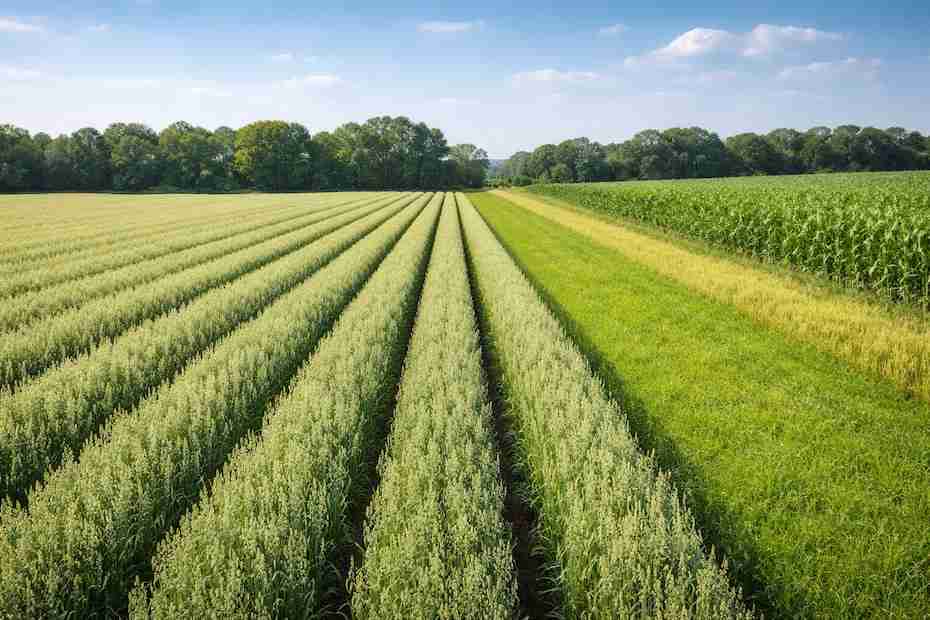
Farmers prevent cross-contamination in the field by applying purity protocol farming methods that control seed selection, field history, isolation, equipment use, inspections, and traceability from planting through harvest.
Purity protocol farming exists because field-level mistakes cannot be fixed later in processing. This article explains how contamination actually happens in the field and how disciplined farmers prevent it using structured, verified practices. You’ll see how purity is protected step by step, why each control matters, and how these methods are executed in real agricultural operations that serve sensitive markets.
What is purity protocol farming?
Purity protocol farming is a field-first production system designed to keep a crop free from unwanted grains, allergens, or genetic material. It is most visible in gluten-free oat production, though the same principles apply to identity-preserved seeds, specialty grains, and allergen-controlled crops. The system focuses on prevention rather than correction.
You operate under purity protocol farming by controlling every point where contamination could enter the field. That includes seed origin, prior crop history, neighboring land use, equipment exposure, and harvest logistics. Each control reduces risk before it becomes measurable damage.
This approach differs from conventional farming because it treats contamination as a process failure, not a quality issue. If purity is lost in the field, no downstream cleaning can fully restore it.
Why is cross-contamination a serious risk in the field?
Cross-contamination begins long before harvest. Residual seeds from previous crops, wind movement, shared machinery, and adjacent fields all create exposure. These risks are invisible at planting yet become critical once the crop matures.
Volunteer plants from prior seasons are one of the most common sources. Even a few remaining wheat or barley seeds can grow alongside oats and remain unnoticed until harvest. Once mixed, separation becomes extremely difficult.
Economic and compliance consequences follow quickly. Contamination can void certifications, delay deliveries, and trigger product rejection. Farmers who work under purity protocols treat field prevention as risk management, not paperwork.
How do farmers ensure seed purity before planting?
Seed purity is the foundation of purity protocol farming. You begin with seed that has been tested and verified free from unwanted grains. This step prevents contamination from entering the field on day one.
Farmers document seed origin, storage, and transport before planting. Many programs require seed testing or supplier verification to confirm compliance. Using uncertified seed immediately increases field risk.
This control sets the tone for the entire season. When seed purity is protected, subsequent steps reinforce an already clean system rather than attempting damage control.
How does crop rotation reduce contamination risk?
Crop rotation protects purity by managing what remains in the soil. Fields used for purity crops typically must remain free from contaminating grains for several years. This waiting period allows residual seeds to germinate and be removed before planting the sensitive crop.
You manage this by tracking field history carefully. Fields that recently hosted wheat, barley, or rye are excluded until the rotation requirement is met. This eliminates volunteer growth that could compromise purity.
Rotation also supports soil health and weed control, which indirectly improves contamination prevention. Healthy fields are easier to monitor and manage with precision.
How do isolation and buffer zones protect the field?
Physical separation between fields plays a critical role. Isolation strips create distance between purity crops and neighboring conventional fields. These buffers reduce the movement of seeds through wind, animals, or equipment drift.
Farmers maintain these buffer zones throughout the season. Inspectors review field boundaries to confirm that isolation remains intact. Any breach increases contamination risk and requires immediate correction.
This separation is not symbolic. Even small distances reduce exposure significantly when combined with monitoring and discipline.
How is farm equipment managed to prevent cross-contact?
Equipment exposure represents one of the highest contamination risks. Seed drills, combines, trucks, and grain carts often move between fields with different crops. Without controls, residue transfers easily.
Under purity protocol farming, equipment is either dedicated to purity crops or cleaned using documented procedures. Cleaning involves physical removal of grain residue from all contact surfaces. Records confirm when and how this work is completed.
This discipline extends to transport and storage. Grain bins, augers, and trailers follow the same rules. Equipment control prevents hidden contamination that bypasses visual inspection.
How do field inspections prevent contamination during the season?
Field inspections identify problems before harvest. Trained personnel walk fields during key growth stages to look for off-type plants, volunteer grains, or boundary issues. Early detection allows removal before contamination spreads.
Inspections occur multiple times during the season. Weather events, nearby harvesting, and wildlife activity all increase risk and trigger additional checks. Inspection logs provide traceability and accountability.
When suspect plants appear, farmers remove them immediately. This hands-on work protects the entire field from compromise and preserves certification status.
How does harvest planning protect crop purity?
Harvest is a critical transition point. Equipment sequencing matters because harvesters often move between different crop types. Under purity protocol farming, harvest order is controlled to avoid cross-contact.
Fields with the highest purity requirements are harvested first or with dedicated equipment. Cleaning procedures are repeated before harvest begins. Transport vehicles are inspected and documented.
You also protect purity by controlling where harvested grain goes next. Loads are kept separate and clearly identified to prevent mixing during transport or storage.
How does traceability support contamination prevention?
Traceability connects every decision back to a specific field. Each purity crop is assigned identifiers that follow it through planting, harvest, storage, and delivery. This system allows rapid verification of compliance.
You use traceability to confirm that every control was applied correctly. If an issue arises, it can be isolated without disrupting unrelated crops. This protects both the farmer and the buyer.
Traceability also strengthens trust. Buyers know exactly how the crop was produced and can audit the process with confidence.
What mistakes undermine purity protocol farming?
The most common failure is assuming one control is enough. Seed purity alone does not protect against equipment residue or volunteer growth. Purity depends on layered controls working together.
Another issue is inconsistent documentation. When records are incomplete, compliance becomes difficult to verify even if practices were followed. Documentation protects both operational integrity and market access.
Complacency also creates risk. Purity protocol farming requires constant attention. One overlooked step can undo months of disciplined work.
How do farmers prevent field cross-contamination?
- Use verified pure seed
- Rotate crops for multiple years
- Maintain isolation buffers
- Dedicate or clean equipment
- Inspect fields and document every step
Build purity into the field, not the label
Cross-contamination prevention begins long before harvest and cannot be fixed later. Purity protocol farming works because it treats contamination as a systems problem, not a sorting problem. When you control seed, field history, isolation, equipment, inspections, and traceability, purity becomes repeatable rather than hopeful. These practices protect market access, certification status, and long-term trust with buyers. Precision in the field is what makes purity real.
If you want more deep-dive breakdowns on agricultural quality systems, field controls, and food integrity, visit my Tumblr profile and explore additional posts that unpack how disciplined farming protects value from the ground up.