
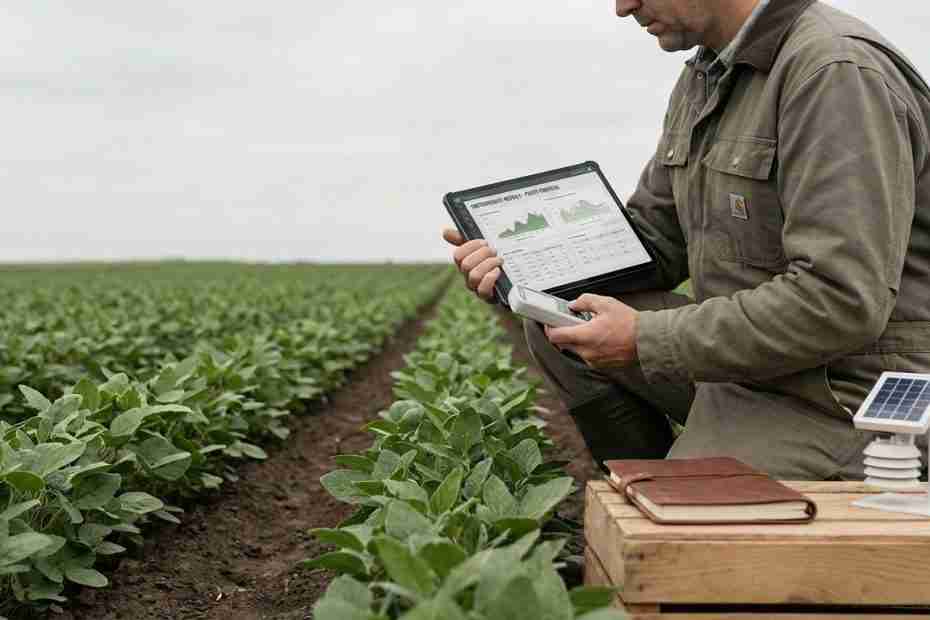
Purity Protocol farming delivers environmental gains by making sustainability measurable at the field level, then pushing you to improve year after year across soil, water, energy, and emissions, rather than relying on vague “eco-friendly” claims.
You get the most value when “purity” means disciplined data capture, verified outcomes, and practical agronomy that reduces losses: less soil leaving the field, fewer nutrients leaking into water, and fewer inputs burned per unit produced. This guide breaks down the benefits you can realistically bank, the practices that tend to drive them, and the barriers you must plan around if you want performance that holds up in audits and in tough seasons.
What Is Purity Protocol Farming, And How Is It Different From Generic “Sustainable” Claims?
In most markets, “Purity Protocol” is not a single, universally recognized global certification name, so it has to be defined by what it does. In practice, the term usually points to a protocol-based system that requires traceability, documentation, and a consistent set of environmental metrics that can be compared over time. That difference matters, since unmeasured sustainability is just a marketing label, and measured sustainability becomes an operating system.
The cleanest way to define Purity Protocol farming is to describe it as a management and verification model that ties farm decisions to tracked indicators. One well-known example of this measurement-first model is the Trust Protocol environmental data tracking structure, which uses six metrics: water use, yield and land use, soil carbon, soil conservation, emissions, and energy use. When you adopt a protocol structure like this, you stop arguing opinions and start managing numbers that can be improved season after season.
Protocol thinking also changes the conversation inside the operation. Instead of debating whether a practice “sounds sustainable,” you evaluate whether it lowers soil loss, improves water-use efficiency, reduces energy per unit output, or tightens nitrogen placement to cut loss pathways. The environmental benefit begins with that discipline: you cannot optimize what you do not track, and protocols force tracking into daily decisions.
What Environmental Metrics Should A Purity Protocol Actually Track?
If the goal is real environmental benefit, the protocol must track what drives the biggest impact categories, then tie them back to farm actions. Food and agriculture carry heavy environmental footprints across greenhouse gases, land use, freshwater withdrawals, and nutrient pollution. Our World in Data summarizes the scale plainly: food production accounts for over a quarter of global greenhouse gas emissions, agriculture uses about 70% of global freshwater withdrawals, and agriculture drives a large share of eutrophication impacts.
A practical protocol tracks indicators you can influence and verify. The Trust Protocol model is a strong reference point because it lays out a clear six-metric structure that matches where management moves the needle: water use, land-use efficiency, soil carbon, soil conservation, emissions, and energy use. Those categories map directly to the levers you control: irrigation scheduling, rotation and residue strategy, tillage intensity, fertilizer placement and rate, equipment passes, and fuel and electricity consumption.
Metrics also protect you from unintended tradeoffs. If you chase yield with aggressive inputs, emissions and nutrient losses can climb. If you chase minimal disturbance without a workable termination plan, weeds can force a chemical or mechanical rebound. A protocol that tracks multiple indicators at once forces balance, which is where the real environmental wins hold up under scrutiny.
How Does Purity Protocol Farming Improve Soil Health And Reduce Erosion?
Soil protection is one of the most visible and financially relevant environmental benefits you can deliver, since erosion is not just an environmental issue, it is lost productivity. Protocol-aligned programs tend to drive soil improvement through three repeatable operating choices: keep soil covered, reduce disturbance, and diversify the cropping plan where feasible. Those choices support aggregation and infiltration, reduce crusting, and reduce the velocity of water moving across the surface during heavy rain.
When a program measures soil conservation, it becomes easier to justify operational changes that protect soil. Data tracking systems that emphasize soil conservation focus on erosion rates and topsoil protection, which pushes you toward residue retention, controlled traffic where possible, and fewer passes. One of the advantages of a metric-driven program is that it can show progress even when the farm is not ready for an all-or-nothing switch, since reduced tillage intensity and better residue management already move erosion indicators in the right direction.
Diversification also matters, and it is not only an ecological talking point. Research on agricultural diversification has linked longer time horizons with improved outcomes including biodiversity and ecosystem services, and it aligns with what experienced operators see: benefits compound when rotations and soil cover remain consistent over multiple seasons. The environmental gain is less sediment leaving the field, less phosphorus bound to soil particles entering waterways, and a system that absorbs rainfall rather than shedding it.
Does Purity Protocol Farming Reduce Fertilizer And Pesticide Runoff, And Water Pollution?
Nutrient loss control is one of the highest-leverage environmental benefits available on most row-crop acres. Agriculture is a dominant driver of eutrophication, since nutrient enrichment in waterways is tightly linked to fertilizer losses and soil movement. Once a protocol makes water-related impacts measurable, it pushes management toward fewer loss events: less runoff carrying dissolved nitrogen, less soil loss carrying phosphorus, and fewer applications that exceed crop demand.
The operational path is straightforward: improve nitrogen-use efficiency and reduce over-application risk. You do that through better timing, better placement, and better rate decisions supported by data, not habit. Precision agriculture supports this by reducing overlap, tightening application zones, and enabling variable-rate strategies where data quality is good enough to justify the management complexity.
Protocols also help with accountability across the season. When application records, weather windows, and field conditions are documented, it becomes easier to show that nutrient management is being optimized rather than guessed. That matters when downstream buyers, brand partners, or auditors ask for evidence that the operation is reducing environmental risk rather than shifting it off the balance sheet.
Can Purity Protocol Farming Lower Greenhouse Gas Emissions And Energy Use In A Measurable Way?
Emissions reductions in crop production come from a few primary sources: cutting fuel and electricity use, reducing nitrogen losses that drive nitrous oxide emissions, and improving efficiency per unit output. A protocol that tracks emissions and energy use creates pressure to reduce unnecessary passes, optimize irrigation pumping energy, and align nutrient decisions with crop uptake. Those are practical changes that do not require waiting on new technology or major capital projects in every case.
Food systems contribute roughly 26% of global greenhouse gas emissions in widely cited syntheses summarized by Our World in Data, so incremental reductions that scale across acres matter. That global number is not a reason to overpromise on any single farm, but it is a clear signal that agriculture sits in the emissions equation. A protocol that measures and reports emissions intensity gives you a management target that can be improved without pretending the farm controls the entire supply chain.
When programs publish emissions and energy metrics, they also create benchmarking pressure. Over time, that drives more adoption of guidance, auto-steer, reduced overlap, better irrigation scheduling, and more disciplined equipment maintenance. The environmental benefit shows up as fewer gallons burned per acre, fewer kilowatt-hours per unit produced, and lower emissions intensity that can be verified with documentation rather than claimed in a brochure.
How Does Purity Protocol Farming Support Water Efficiency And Drought Resilience?
Water is where protocol-based management becomes immediately operational, since irrigation decisions can be measured and improved quickly. Agriculture accounts for about 70% of global freshwater withdrawals, according to FAO, which makes water-use efficiency a core environmental metric rather than an optional add-on. A protocol that tracks water use forces clear accounting: how much water is applied, what drives the demand, and what management changes actually reduce the total without sacrificing crop goals.
Soil management and water management reinforce each other. Better soil structure and residue cover support infiltration and reduce evaporative loss, which means more rainfall becomes plant-available water rather than runoff. When you pair that with disciplined irrigation scheduling, pressure and nozzle checks, and targeted irrigation where the system allows it, water-use efficiency improves in a way that can be documented and defended.
Resilience comes from reducing extremes, not chasing perfect seasons. When soil holds water longer and irrigation is applied with tighter timing, crops ride heat windows better and recover faster after stress. The environmental benefit is lower withdrawals, less energy used for pumping, and reduced risk of nutrient loss events tied to heavy rainfall on bare or compacted ground.
What Are The Biggest Practical Barriers Farmers Hit When Implementing Cover Crops, Reduced Tillage, And Protocol Reporting?
The benefits are real, but the friction is real too, and serious operators plan for it instead of ignoring it. Farmers often cite equipment cost, field drainage constraints, learning curve, and operational risk as the practical barriers, not a lack of interest in soil improvement. Community discussions around no-till and cover crops often highlight drainage and field condition constraints, plus the cost and management demands of getting systems stable without yield penalties.
Termination and timing are recurring issues. If cover crops are not terminated cleanly, cash-crop establishment can suffer and weed pressure can shift the chemical plan, which can undercut environmental goals if it forces reactive inputs. Operators also run into labor and logistics constraints: narrow windows, equipment availability, and weather volatility compress decision-making into days, not weeks.
Protocol reporting itself adds workload, and that workload has to be managed like any other production task. Data collection that feels optional becomes inconsistent, and inconsistent data is useless in audits and weak in buyer conversations. If protocol farming is a serious strategy, it needs a simple, repeatable recording process that fits the operation’s pace during planting, spraying, irrigation, and harvest.
What Are The Environmental Benefits Of Purity Protocol Farming?
- Less soil loss, better soil carbon tracking
- Higher water-use efficiency, lower withdrawals risk
- Lower energy and emissions intensity through measured operations
- Reduced nutrient loss pathways with tighter input management
Put The Protocol To Work On Your Acres
Purity Protocol farming delivers its environmental upside when it is treated as operations, not branding: define the metrics, collect clean data, then manage decisions against those numbers. Soil conservation gains come from cover, reduced disturbance, and smarter rotations that keep topsoil in place and reduce nutrient loss. Water benefits show up when irrigation is tracked and optimized, supported by soils that absorb and hold moisture. Emissions and energy improvements come from fewer unnecessary passes, better application efficiency, and disciplined irrigation and nutrient management. If the protocol also addresses the real barriers, equipment fit, termination, timing, and reporting workload, it becomes a durable system that holds up through audits and tough weather years.
References
- Trust US Cotton Protocol, Environmental Data Tracking (Six Metrics)
- Our World in Data, Environmental Impacts of Food Production
- Our World in Data, Food GHG Emissions (Food System Share)
- FAO, Water For Sustainable Food Production (Global Withdrawals)
- ArXiv, Agricultural Diversification And Long-Run Ecosystem Services
- Reddit, Producer Discussion: Why Not Cover Crop And No Till
- Reddit, RegenerativeAg: Terminating Small-Scale Cover Crops
- UN DESA SDGs Partnership Platform, U.S. Cotton Trust Protocol
- Trust US Cotton Protocol, Sustainability And Precision Agriculture In Cotton
- Trust US Cotton Protocol, Program Update On Metrics Progress.